Microdose for more pruductivity, creativity and a better state of mind
Microdose for more pruductivity, creativity and a better state of mind
What is Microdosing?
What is Microdosing?
Microdosing psilocybin became known worldwide in 2015 and quickly became popular. You take 1/10th of the trip dose. This prevents tripping and harmful effects, while enjoying subtle benefits. You experience effects on a sub-perceptual level, without the visual disturbances. By microdosing you do experience the advantages, without the disadvantages of psychedelic drugs.
We’ve been producing , traded and exported in different countries and developed different head offices . It is a legal in some part of the countries and we still deliver discretely
The benefits
Why microdosing?
Our customers microdose for all kinds of personal reasons. Some feel more creative, others are more productive, and still others experience fewer medical issues. For them, microdosing is a means that helps them with various challenges and problems. You can experience one or more of the following benefits:
Enhanced energy: Feel more vibrant and productive throughout the day.
Sharper focus: Experience clearer thinking and improved problem-solving.
Boosted creativity: Unlock new levels of inspiration and innovative thinking.
Improved concentration: Stay focused on tasks for longer periods with ease.
Reduced anxiety: Enjoy a calmer, more balanced state of mind.
Elevated mood: Feel uplifted and more positive about life.
Microdosing offers a simple yet powerful way to enhance various aspects of your life. Try it today and unlock your full potential.
It's effects
What's happening in your brain?
The precise operation of microdosing is neuroscientific and therefore extremely complicated. These are psychedelic substances that, in microdose, have an effective effect on serotonin receptors (5-hydroxytryptamine or 5-HT) in the brain. This system regulates the mind and the way you learn.
The nervous system contains all kinds of serotonin receptors, which together regulate functions varying from your mood and memory to thinking and bowel movements. The 5-HT1A, 5-HT2A, 5-HT3, 5-HT4, 5-HT6, and 5-HT7 receptors are responsible for your memory and thinking capacity. Microdosing creates a cognitive boost by its effect on the 5-HT2 receptor.
Customers' experience
Experiences reported by our users:
- Enhanced clarity: Sharpened thinking & enhanced problem-solving skills.
Improved focus: Better concentration, even if you struggle with ADHD.
Reduced anxiety: Find relief from fears and anxiety-related issues.
Elevated energy: Feel more energized, creative, and productive.
Enhanced mood: Enjoy better sleep quality and a brighter outlook on life.
Menstrual relief: Notice a reduction in PMS symptoms.
Addiction support: Easier to overcome smoking and other addictions.
Improved communication: Less trouble with stuttering & speech problems.
Deeper connections: Foster stronger emotional bonds with those around you.
Heightened presence: Become more self-aware and present in the moment.
Embark on your microdosing journey and unlock a world of positive change.
The Farm
Discover our roots
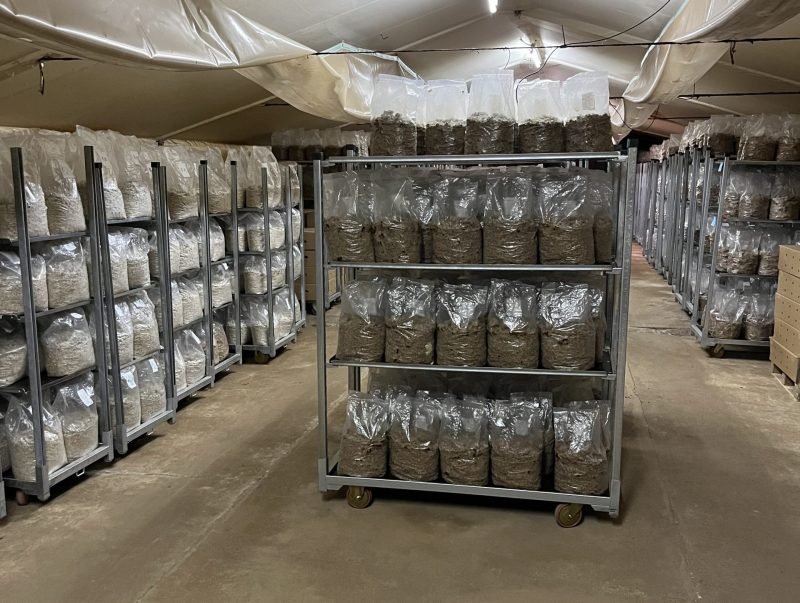
Ever wondered about the origin of our psilocybin ? Our farm, nestled in the heart of Uk America Australia , is where it all begins. With over 13 years of expertise, we’ve cultivated a deep understanding of psilocybin cultivation, ensuring the highest quality product for our customers. From seed to harvest, every step of the process is meticulously managed to guarantee optimal growth and potency. Curious to peek behind the scenes? Explore our farm and witness firsthand the dedication and care that goes into every batch of our premium mushroom .
THE ULTIMATE GUIDE TO MICRODOSING
As outlined in the journal of Janet Chang, by 2017 there were more than 60 completed or in-progress studies around the world on the potential of psychedelics; a sign of the intense interest in this topic. While much more research has yet to be done, here’s what we know, and what you should know,
To explain more about it
What is microdosing?
Psychedelics are a hallucinogenic class of psychoactive drugs known to trigger extraordinary mental activity and experiences by mimicking the effect of the body’s naturally-occurring chemical, serotonin, which affects things like mood, learning, and memory.
Some of the best-known psychedelics are mescaline, LSD, psilocybin and DMT. Unlike other types of drugs including opioids and narcotics, psychedelics are generally believed to be non-addictive.
Here’s where the “micro” part comes in.
While the experience of “tripping” on a significant amount of say, LSD, can feel extreme and even prove dangerous, microdosing is the practice of ingesting very small (“sub-perceptual”) amounts of a psychedelic drug – 5 to 10% of a “recreational” dose – in order to experience positive psychological effects without any undesirable side effects: a happier mood, increased creativity, less anxiety, greater focus.
The most commonly microdosed psychedelics are LSD and psilocybin (the active alkaloid in mushrooms, as well as a type of truffle).
And these things are freely available?
Not quite.
Certain psychedelic drugs used in microdosing are legal in some countries, and illegal in others – the legislation varies broadly from country to country.
we at Field Wellness with – have escaped recent legal restrictions imposed on mushrooms and are fully legal to grow, sell and consume legal to ship within the European Union United States and some parts of the world
THE HISTORY OF MICRODOSING
It is quite likely that microdosing as a practice – if not as a pop-culture term – has been around for thousands or millions of years; for example, indigenous cultures on the American continent were ingesting peyote or mescaline in ancient times, often in low doses – that’s technically microdosing.
Indeed, “Anthropological reports indicate that many traditional cultures incorporated the use of psychedelic plants such as peyote, morning glory seeds and psilocybin-containing mushrooms into many aspects of daily life”.
So why have so many people only heard about microdosing recently?
Modern microdosing has actually been in use for several decades – but largely on the quiet and on the fringes of society, due to the late 20th century’s “war on drugs” including psychedelics.
Psychedelics including LSD and psilocybin were classified as illegal class A drugs in the USA in 1970 and in the UK in 1971. In the 2 000s a resurgence in microdosing began to emerge among individuals engaged in highly creative or innovative work, very cerebral work; and individuals who were open to experimenting with new things – Silicon Valley, in the USA,
WHY PEOPLE MICRODOSE?
There will be a plethora of granular-level double-blind studies on microdosing in the years to come, but the science of microdosing and why people do it is still relatively nascent. However, as Dr. Ethan outlines in this stage presentation, people have reported back that they choose to microdose for a variety of reasons. He mentions people who microdose to relieve anxiety; to feel more relaxed in social situations; to fuel their creativity – be it technological or artistic; to enjoy learning to a greater degree, and to focus better while doing so – even to improve their stuttering.
Now here’s something intriguing.
Some microdosers have found that microdosing actually helps to decrease their reliance on addictive habits like cigarettes or alcohol.
Arguably, microdosing is a much safer habit than these more traditional ones – and psilocybin – which we use at FIELD WELLNESS MICRODOSE – is not considered to be an addictive substance. A number of people who have struggled with alcohol dependence report that microdosing literally changed their life – have a look at this John Hopkins study.

LEARN MORE ABOUT MICRODOSING
In recent studies, this was one of the three most-commonly cited reasons for microdosing, along with better focus and creativity. This study reported “a slight rebound in feelings of focus and productivity two days after dosing”.
Also, after six weeks of microdosing, “participants reported lower levels of depression and stress”. Ayelet Waldman, in her memoir A Really Good Day, writes “for the first time in so long, I feel happy. Not giddy or out of control, just at ease with myself and the world. When I think about my husband and my children, I feel a gentle sense of love and security. I am not anxious for them or annoyed with them. When I think of my work, I feel optimistic, brimming with ideas, yet not spilling over. There’s nothing hypomanic about this mood. My mind is not racing. I feel calm and content “.
IMPROVED FOCUS
May, a 64-year-old psychotherapist in Marin County, USA, says “For me, it’s just clarity. It’s like how you would feel if you had a really good, deep rest, and then woke up and were able to focus very clearly.”
If you watched DR.ETHAN presentation, above, you’ll have heard that one user chose microdosing to help them concentrate better in their classes. It may be that the potential benefit of microdosing to reduce anxiety could contribute to improving focus because the latter becomes more difficult when anxiety is heightened.
Any other personal experiences in this aspect?
Yes, for example, Bernard Woods writes: “At one point during my first session, I looked up and realized I’d been totally engrossed in my work with no real awareness of anything else for an hour … I found myself more deeply absorbed in that zone we all hope to be in where the doer and the deed dissolve together into the pleasure of pure work.” Karen Geier, meanwhile, reports that “Dose two was the miracle dose for me. I took it and within an hour felt intense motivation. I spent six hours doing all the chores around the house that I had been putting off for weeks.“
Improved creativity
During a microdosing event organized by the Dutch Psychedelic Society, the effects of psychedelic truffles (containing psilocybin) were measured on two creativity-related problem-solving tasks, one assessing convergent thinking and the other assessing divergent thinking.
The results? “both convergent and divergent thinking performance was improved after a non-blinded microdose, whereas fluid intelligence was unaffected.”
The research, driven by Luisa Prochazkova of Leiden University, and published in the Psychopharmacology journal, studied the cognitive effects of microdosing psilocybin and found that “participants also had more ideas about how to solve a presented task, and were more fluent, flexible and original in the possibilities they came up with.”
As a side note, Prochazkova mused after the study, “microdosing could be further investigated for its therapeutic efficacy to help individuals who suffer from rigid thought patterns or behavior, such as individuals with depression or obsessive-compulsive disorder” – the latter being very much a condition of the author of this article.
Improved self-efficacy
Many microdosers have said that microdosing helps them live a healthier lifestyle – more enjoyment of exercise, better dietary habits, less reliance on other substances or habits, like alcohol.
After years of struggling with alcohol dependence Karen Shaw started microdosing psilocybin. She began in line with a pattern recommended by DR ETHAN , taking a sub-perceptible dose of psilocybin mushrooms twice-weekly over six weeks. What she discovered, in time, was that “I started drinking less. I’ve not stopped. I might have a glass of wine, or some cannabis, a joint after work. But I don’t drink to excess. I don’t like getting drunk anymore. It’s not something I enjoy.”
And for the two-boxes-a-day people?
Although more research is needed, studies have also shown that microdosing can help longtime smokers kick the habit. Along with alcohol dependence, John Hopkins has been looking into this possibility with volunteers. A recent study published by Plus One noted “a perception of microdosing as a general panacea that is able to improve virtually all aspects of an individual’s life”. All 98 participants expected their benefits to be “large and wide-ranging”.
Improved energy
O.K., so again, research into the many possible benefits of microdosing is nascent – often we must go by individuals’ blogs, rather than ‘hard science’ (whose findings take time to be tested, reviewed and accepted) – but Dutch graphic designer Dennis van der Meijden – and by most accounts, the Netherlands appears to be the world leader in terms of individuals trialing and reporting back to their online followers on microdosing – has this to say about energy: microdosing makes him energetic enough to skip coffee – “as if I’m kicked in some sort of orbit for that day”.
That could be a help at the gym.
Well, Ross Stevenson, on Medium, has this to say about his workouts: “I’m able to workout smarter in a shorter time frame; I have more energy in my day to day and don’t feel like I’m as broken as usual; My conditioning and muscle mass has improved not diminished; I’m actually excited and look forward to my workouts more than ever. My sessions have become more like a physical meditation which allows me to calm my mind and body.” Here’s an ongoing discussion about microdosing for better workouts.
Better social skills
What has been your experience of social anxiety/social phobia? Have you ever had intense feelings of anxiety, fear, and discomfort in social settings? It can be a crippling experience for those who find themselves agonizing about going or not going to weddings, lunches with friends or meetings with colleagues (even on Zoom) – or agonizing over “how it went” afterward, if they did brave the occasion in question.
Until now professional therapy, in tandem with prescribed antidepressants containing SSRIs (selective serotonin reuptake inhibitors) has mostly been used to help individuals with serious anxiety conditions.
You may well know people who try to destress with alcohol.
Millions of people around the world rely on alcohol to quell their social anxiety but microdosing psychedelics is arguably a healthier and less addictive option. Globally, every year, 3 million people die as a result of alcohol abuse.
On the other hand, the potential of psychedelics to treat anxiety, depression, and other mental illnesses has been the focus of specialists including psychologist William Richards for over half a century, and his feeling is that these substances are “ not toxic. They’re not addictive … And they can be profoundly helpful.”
GET STARTED
“Reduced symptoms during period for women”
A number of women who have had difficult periods report that their periods are now normal. We got a note from a woman in her 20s who said that during the month she microdosed, her periods, which are usually extraordinarily difficult and painful, were now normal.
“Other potential benefits of microdosing”
The potential of the substance psilocybin to help cancer patients is receiving ongoing scrutiny. A study was run on its effects in cancer patients with life-threatening diagnoses, who were understandably going through depression and/or anxiety.
The randomized, double-blind, cross-over trial investigated the effects of a low (placebo-like) dose vs a significantly higher dose. The research showed that the latter resulted in the “decrease of depressed mood and anxiety, along with increases in quality of life, life meaning, and optimism, and decreases in death anxiety.”
Other research, meanwhile, showed that cancer patients who were treated with just a single dose of psilocybin, combined with psychotherapy, showed improvement in levels of emotional and existential distress nearly five years after receiving the therapy.
Field Wellness Microdose has found that more of its customers are women than men. What are the possible reasons for this?
As reported on The Cut, here’s an insight from Dr. Ethan :
“A number of women who have had difficult periods report that their periods are now normal. We got a note from a woman in her 20s who said that during the month she microdosed, her periods, which are usually extraordinarily difficult and painful, were now normal.” Many people think women are more inclined than men to pursue a healthier lifestyle, meaning they could look to microdosing to help with their exercise routine, or to help them quit unhealthy addictions. Women are also known to have higher empathy levels than men, and the possible benefit of microdosing to improve interpersonal relationships should not be overlooked.
Janet Chang, our customer : “I became more tolerant and compassionate towards people. I would chat with convenience store owners, give smiles to strangers walking down the street, and once had a 4-hour conversation with my coffee shop baristas while I waited in an airport.” And later she writes, “Over the years I microdosed, I became a more empathetic, compassionate, and affectionate person. I began to live with more acceptance, gratitude, and presence of mind.”
“Which substances do people microdose?”
Now that we are aware of the benefits of microdosing, let’s dive a bit deeper into the various substances that are being used for microdosing.
“Psilocybin mushroom”
Psilocybin or “magic” have become increasingly popular since 2008 when the Netherlands outlawed psilocybin or “magic” mushrooms – but somehow not psilocybin truffles.
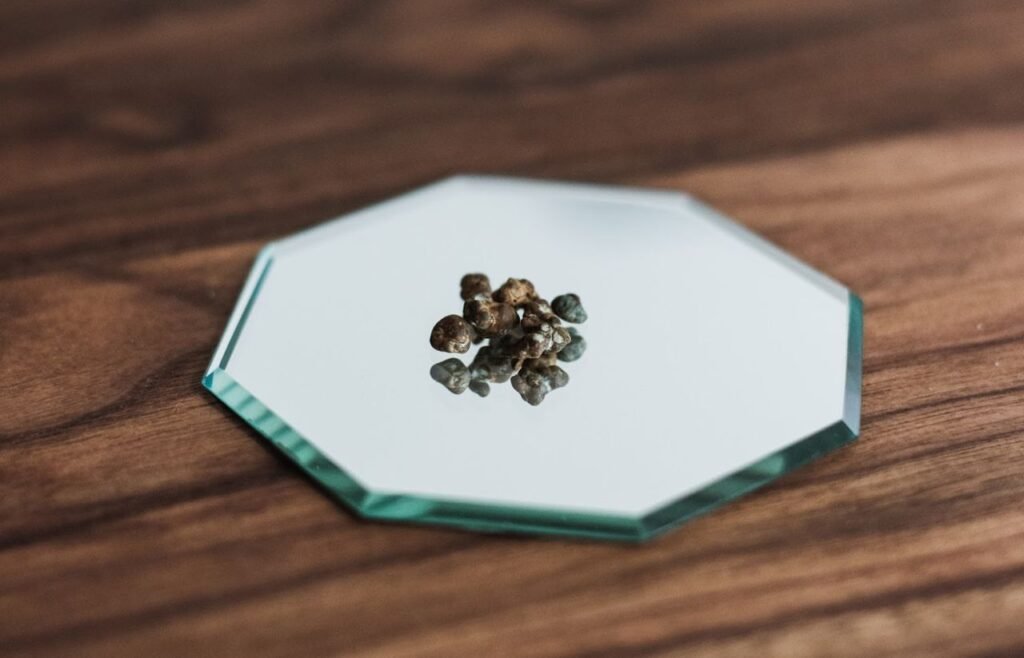
The truffles are hard nodules called sclerotia that form on the magic mushrooms’ mycelia; think of them as underground extensions of the mushroom, which are hard and dense and have much less moisture content than the stems and caps you see above ground.
Psilocybin truffles are not the same as the truffles used in cooking …
That kind or truffle belongs to the genus Tuber. Meanwhile “magic” truffles are storage spaces for nutrition for the magic mushrooms during difficult growing conditions. They contain the same psychoactive compounds responsible for inducing a psychedelic effect, just as “magic” mushrooms do, but with less powerful potency than the stems and caps (note: people debate whether this is indeed true).
The effects of responsibly microdosing psilocybin truffles can include heightened senses, increased focus, mood changes, amplified creativity and more energy and motivation.
Psilocybin mushrooms
There are more than 180 species of mushrooms containing psilocybin or the derivative psilocin, and, as mentioned, earlier, many have been used by indigenous cultures in their spiritual and religious rituals since ancient times.
Psilocybin is a naturally occurring psychoactive and hallucinogenic compound first isolated in 1958 by Albert Hofmann. The mushrooms containing psilocybin look a lot like ordinary mushrooms with their long, slender whitish-gray stems and dark-brown caps.
A word of caution: It is slightly possible to confuse magic mushrooms with some toxic types of mushrooms, although most of these look quite different. Thats why you need a guider One type, called Pholiotina rugosa, does look a bit like the magic mushroom – although it has a tell-tale ring around the middle of the stem; psilocybin mushrooms do not. The effects of taking too much psilocybin can include disorientation, lethargy, giddiness, and severe anxiety.
“LSD”
LSD (Lysergic acid diethylamide) is a mind-altering psychedelic drug that is manufactured from lysergic acid found in the ergot fungus growing on rye or other grains. In its pure form, LSD is clear or white in color, has no smell, and is crystalline.
Often just called “acid”, it is usually sold in the form of small tablets, capsules, or squares. The psychological effects of an “acid trip” usually begin within half an hour and can last for up to 12 hours.
A worrying factor about LSD is that these trips can be either very “good” or very “bad”- ranging from euphoric to nightmarish. LSD users have been known to develop long-lasting psychoses or depression. Albert Hoffman was the first person to make LSD in 1938 – but he only discovered its hallucinogenic properties in 1943.
“Iboga “
Iboga (Tabernanthe iboga) is a rainforest shrub native to West Africa, Apocynaceae. In the Central West African rainforest, iboga has been used in healing rituals and traditional practices for thousands of years. It was first discovered by the region’s pygmies or forest people. The primary use of Iboga is to treat addiction to opiates and other highly-addictive drugs.
The effects of iboga, including the sensations of having a “waking dream”, can last for many hours. Iboga is very potent, however, when it is microdosed, the effects are far gentler and include phases of introspection and heightened mental activity.
Our sources are safe and we provide guidance to our customers and those who need it
“DMT”
Considered the world’s most powerful psychedelic, DMT (Dimethyltryptamine) is a crystalline powder sourced from plants found in Asia and middle and South America. We have it in cartridge too that’s liquid also Bufo
It is sometimes inhaled, but can also be mixed into brews such as Ayahuasca.
Some of the serious effects of DMT ingestion can include hallucinations, – even muscle rigidity,
, . The effects of microdosing DMT have been explored in rats, with the research showing that DMT, when given to rats at low doses, improved their depression and anxiety score.
But I’m a human…
Matthew Korfhage writes that, when, microdosing DMT, “ the effects were both mild and pleasant, euphoric without attendant spaciness, an open window on a slightly more beautiful and less threatening world. I felt, primarily, interest – a proactive curiosity that is the polar opposite of depressed apathy.”
What our clients say
We've spread some happiness


About Us
At Field Naturae we strive for a healthier & happier life with more creativity, concentration and energy. We fight depression, anxiety and panic complaints. The profound benefits we experienced personally were transformative. This transformation sparked a professional passion: to extend these benefits to others.
- +(805) 498-4719
- Medplus@info.com
- 3421 Lesser Dr Newbury Park, CA 91320